

Card interpretation · A practical perspective
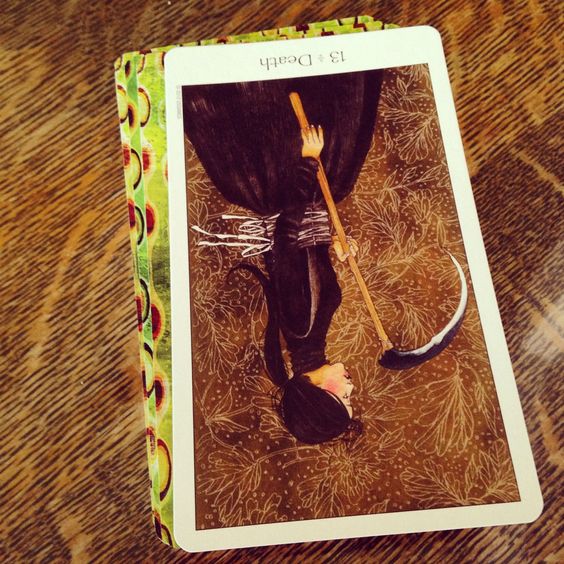
Death reversed can be explored as an image of unfinished transition, reluctance or a change taking longer than expected. It is not a prediction of physical death, and no percentage or exception makes tarot a way to estimate that risk.
A delay is not always resistance
Money, housing, caregiving and other practical constraints can slow a change. Calling those limits fear or self-sabotage may obscure what support is needed. Name the obstacle before choosing a response.
Closure may be practical
A transition might need a handover, a conversation, a revised schedule or time to acknowledge a loss. The card does not guarantee a new beginning or require an immediate ending.
Read the imagery in context
The Rider–Waite–Smith image shows an armored skeletal rider carrying a black banner with a white rose. People of different ages and positions meet the rider, while light appears between distant towers. Waite discusses transformation and passage; contemporary readers often use the scene to explore change and renewal.
Put it into practice
- Name the change in concrete terms.
- Identify one practical constraint.
- Choose a supported next step at a realistic pace.
Where can I find the full upright and reversed guide?
The related card guide below covers the image, interpretations, everyday contexts and reflection questions. Meanings vary by deck and reader; none establishes a factual prediction.
Historical reference: A. E. Waite, The Pictorial Key to the Tarot. Practical suggestions are contemporary reflection prompts.
The explanation of Death reversed is quite enlightening. The idea of delayed change and needing to reassess our current strategies feels relevant in many areas of life. I appreciate the emphasis on the card being a signal for cautious reflection rather than a negative omen.
The explanation of different Tarot spreads and how the position of the Death card affects its meaning adds depth to the interpretation. Recognizing it as a prompt for strategic reassessment rather than a symbol of doom is a refreshing perspective.
The analogy of moving to a new city and experiencing setbacks provides a clear perspective on what Death reversed might represent. The guidance on dealing with internal conflicts and working around external impediments is quite useful for anyone facing significant life changes.
It’s interesting how the Death card can symbolize not just an ending but also a new beginning. The concept of obstacles and delayed progress resonates with many real-life experiences. This thorough analysis offers a practical approach to understanding the card’s significance.
This article offers a nuanced view of the Death card that goes beyond common misconceptions. The idea that the card can reflect internal struggles or external barriers is particularly insightful. It’s a reminder that Tarot can offer profound, non-literal guidance.