
Card library · Water
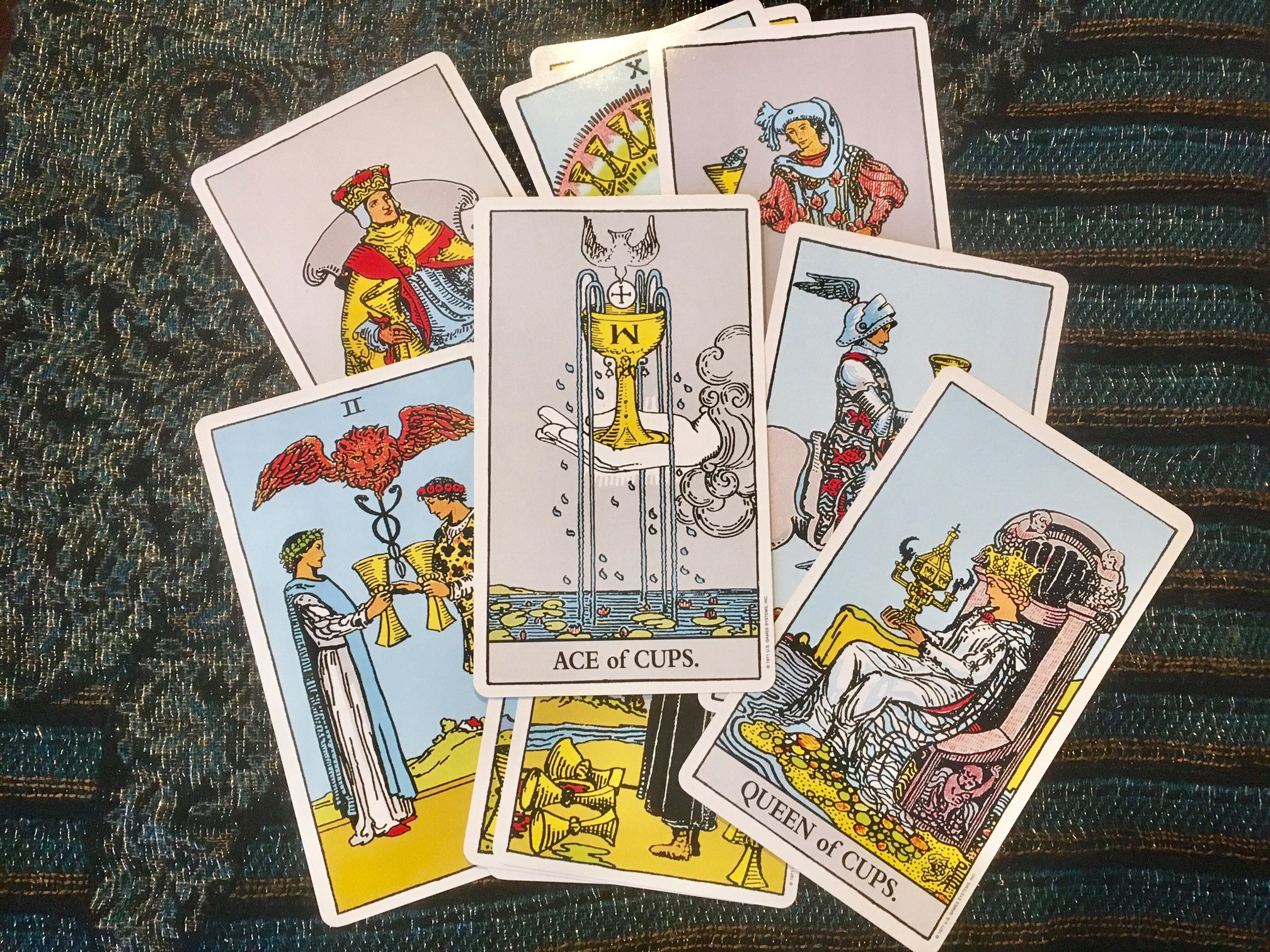
Cups explores feelings, connection, imagination and what gives an experience personal meaning. It includes friendship, disappointment, contentment and the choice to move on. These themes belong to everyone; the suit is not restricted to a gender or to romance.
How to read Cups
Water and vessels provide a symbolic language for receiving, sharing and containing experience. A feeling can be important without being a factual verdict about someone else. Use Cups to articulate your experience, then seek direct communication where another person’s choices are involved.
A question to begin with
What am I feeling, and how can I respond without assuming I know another person’s mind?
Explore all 14 cards
Ace of Cups
Openness, affection, creativity, receptivity.
Two of Cups
Reciprocity, agreement, affection, partnership.
Three of Cups
Community, celebration, friendship, support.
Four of Cups
Contemplation, dissatisfaction, withdrawal, discernment.
Five of Cups
Grief, disappointment, regret, changed expectations.
Six of Cups
Nostalgia, kindness, familiarity, memory.
Seven of Cups
Options, fantasy, imagination, uncertain priorities.
Eight of Cups
Departure, searching, changed priorities.
Nine of Cups
Contentment, enjoyment, appreciation, fulfilled effort.
Ten of Cups
Belonging, harmony, shared values.
Page of Cups
Imagination, emotional curiosity, a tentative expression.
Knight of Cups
Invitation, idealism, expression, pursuit of meaning.
Queen of Cups
Empathy, reflection, receptivity, care.
King of Cups
Composure, compassion, measured response.
Reading the court cards
The Page can invite emotional curiosity; the Knight, expression; the Queen, attentive care; and the King, steadiness. These are possible qualities rather than proof of a person’s age, gender, sensitivity or hidden intentions.
Put the theme into context
The Two of Cups can prompt a conversation about mutual agreement. The Seven asks you to compare an appealing possibility with its practical conditions. The Five can acknowledge disappointment without demanding that you immediately find a silver lining.
Upright and reversed meanings
A reversed Page of Cups can invite attention to a feeling that is difficult to express, while a reversed Four of Cups may suggest looking again at an invitation you overlooked. Read the emotional situation with tenderness. The same reversal convention can lead to different questions in different cards.
Do Cups cards prove that someone loves me?
No. They cannot establish someone’s feelings, consent or future behavior. Look for mutual interest, respectful communication and consistent actions rather than treating a reading as confirmation.
Explore traditional Cups imagery in A. E. Waite’s The Pictorial Key to the Tarot.
Explore the many shapes of emotional life
Cups make room for tenderness, friendship, longing, disappointment and fulfillment. The Two emphasizes an exchange between people; the Three adds a wider circle; the Six brings memory into view; the Eight may ask what no longer nourishes you. The suit can support a heartfelt reading without reducing every card to a prediction about romance.
Compare satisfaction with belonging
Read the Nine and Ten of Cups side by side. The Nine may invite you to name what feels satisfying personally, while the Ten opens a question about shared harmony. Ask which experience you want to cultivate and what would help it feel genuine. Private contentment and community can support one another, but they are not the same question.
The Suit of Cups appears to play a crucial role in revealing one’s emotional landscape during a tarot reading. The detailed analysis of each card’s meaning is particularly helpful.
This article serves as a useful guide for anyone looking to delve into tarot readings, especially with a focus on the Suit of Cups. The emotional and logical aspects tied to these cards are intriguing.
The article provides a comprehensive overview of the Suit of Cups in tarot. It seems like the Cups hold significant emotional value and can indicate various states of being depending on the specific card drawn.
Understanding the symbolism behind each card within the Suit of Cups can offer a deep insight into one’s emotional state and personal growth. The interpretations for each card appear well thought out.
The description of each card in the Suit of Cups is clearly articulated. It helps in understanding how different emotional states and situations are represented in tarot readings.