

Psychic.Cards · Reflection with perspective
Tarot cannot verify what a pet is thinking or feeling. Animals communicate through behavior, body language, health and environment, and those signals require careful observation.
Use the reading to notice your part in the relationship
Ask what you appreciate about the bond, what your daily care looks like and which practical details deserve your attention. The reading is a reflection on your experience as a caregiver, not a substitute for observing the animal’s behavior or obtaining veterinary advice.
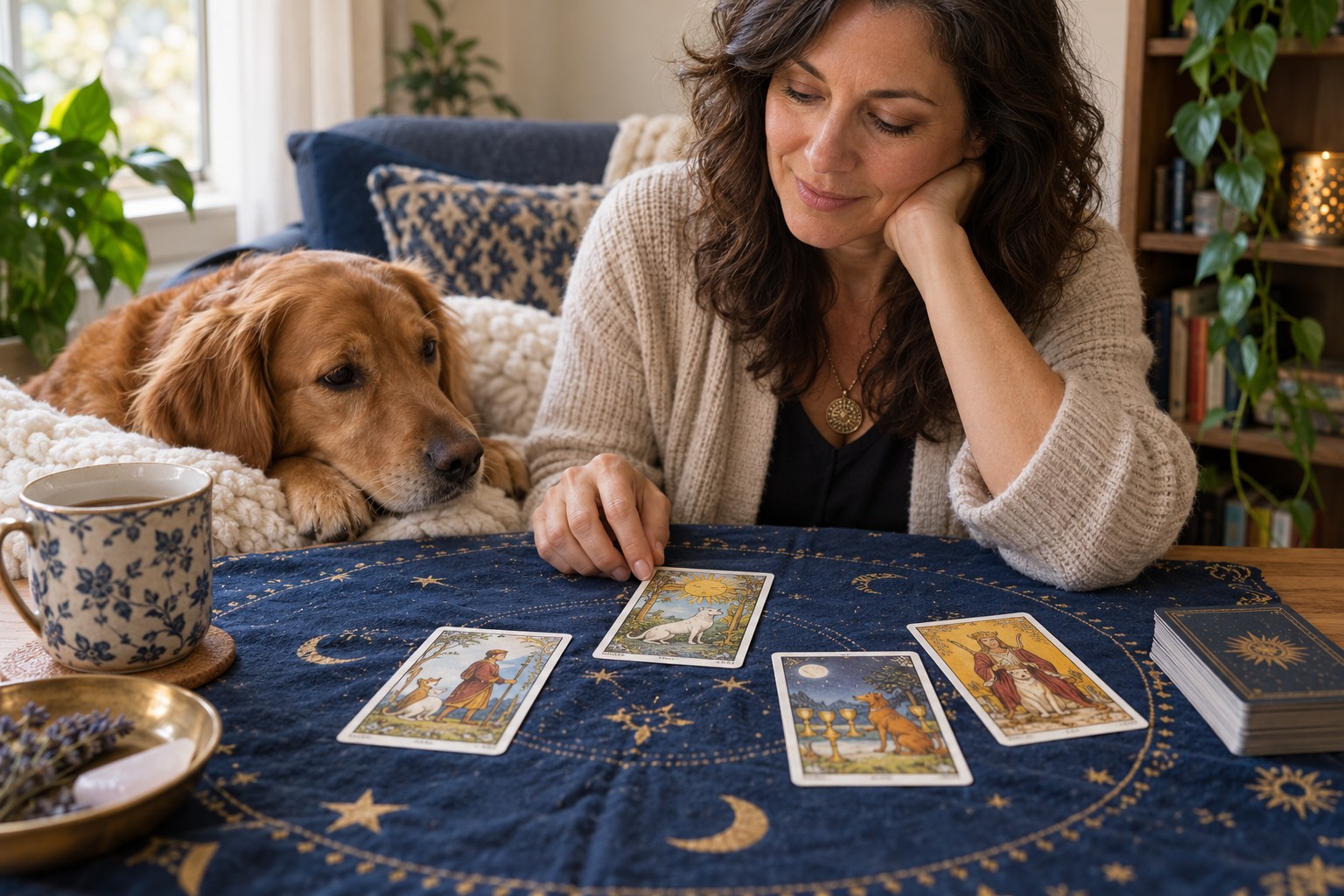
A Queen of Pentacles theme might inspire a review of the pet’s comfortable resting spaces, while the Six of Cups could prompt gratitude for familiar moments together. Write one thing you enjoy and one ordinary care task you want to handle thoughtfully. Concerns about pain, appetite or other health changes belong with a veterinarian, not a card interpretation.
A safe reflective spread for caregivers
- Needs: Which routine—food, exercise, rest or enrichment—should I review?
- Environment: What recent change may be affecting behavior?
- My role: What can I do more consistently?
Health and safety boundary
Do not use cards to diagnose pain, choose medication or decide whether an animal needs care. Sudden behavior change, appetite loss, breathing difficulty, injury or persistent distress warrants veterinary advice.
Avoid projection
A reading may reveal your worry or hope, not the animal’s private message. Check interpretations against observable behavior and qualified guidance.
The best outcome is a concrete improvement in care—not a claim of telepathic certainty.
Keep a care log instead of a prediction
If a card prompts concern, translate it into an observation you can actually record: appetite, activity, sleep or a change in routine. Note when the change began and share that information with your veterinarian. Do not delay care while waiting for a more reassuring draw.
The explanation of the different suits and what they signify for pets is quite detailed and compelling. However, I wonder how one would ensure that the reading is genuinely reflective of the pet’s emotions and not just a projection of what the owner wants to hear.
That’s a valid point, Pearl. It might be worthwhile to consider the psychological aspects of how humans interpret and project meanings onto these readings. The subjective nature of such practices could indeed influence the perceived accuracy of the readings.
While the idea of tarot readings for pets may seem unconventional, the breakdown of the suits and court cards provides a structured approach to interpreting the cards. It would be fascinating to see real-life examples of pet readings.
The concept of using tarot cards for reading pets’ emotions and thoughts is indeed fascinating. However, I’m curious about the accuracy and scientific backing of such practices. Are there any studies or empirical evidence that support the effectiveness of tarot readings for pets?
I’m intrigued by the suggestion that tarot readings can pick up on the energies emitted by pets. Given that pets cannot verbally communicate their thoughts and feelings, this method could offer an alternative way to understand them better.
This article brings up an interesting point about how tarot cards do not require birthdates, making them more versatile for readings, especially for pets. It would be intriguing to see how these readings align with a pet’s behavior and well-being.