

Major Arcana · XX
Judgement can be read as a call to review, respond and make a more conscious choice. It need not mean condemnation. A useful reading asks what you have learned, what responsibility is yours and what next step reflects that understanding.
Upright
Review, accountability, a considered response and renewed purpose.
Reversed
Avoided review, harsh self-judgment or uncertainty about a next step.
A question to explore
What have I learned, and what response is now mine to make?
Imagery and symbolism
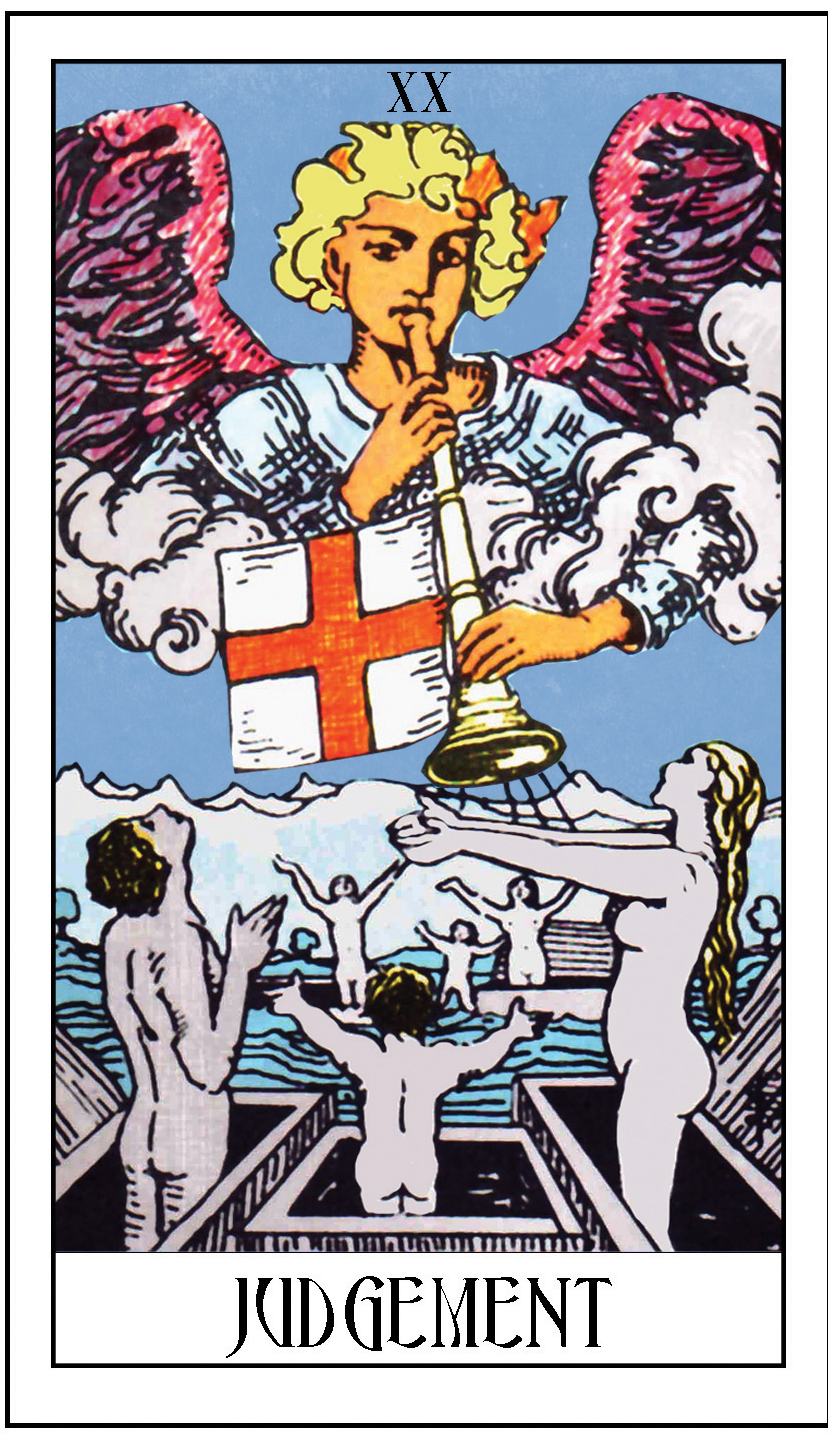
The Rider–Waite–Smith scene shows a winged figure sounding a trumpet while people rise with outstretched arms. It draws on Christian Last Judgement imagery. Waite treats the summons as an image of transformation; a contemporary reflection can use it to explore reassessment without requiring a religious belief.
Judgement upright
Upright, review a situation with both honesty and proportion. Recognize what you can change, acknowledge an impact and decide whether repair is possible. Learning from a mistake does not require defining yourself permanently by it.
Judgement reversed
Reversed, distinguish useful accountability from repeated self-punishment. You may be avoiding a decision, or you may already have reviewed it enough. Seek relevant feedback rather than drawing repeatedly until the card grants reassurance.
Love and relationships
A conversation about repair needs consent and specific changes. The card does not promise an ex will return or require someone to forgive you.
Work and study
Evaluate a project, role or direction using clear criteria. A sense of purpose can guide questions, but it does not replace information about a practical opportunity.
Money and practical decisions
Review commitments and previous decisions without shame. Use records and qualified advice where needed; tarot cannot determine a legal or financial outcome.
Past, present and future positions
Past
Identify a lesson from an earlier decision without rewriting the facts.
Present
Choose a response that matches your actual responsibility.
Future
Define what changed behavior would look like over time.
Answer the call to reconsider what matters
Judgement can bring the sense of awakening to a value or purpose you are ready to take seriously. Its invitation is to review your experience with honesty and compassion, then choose how you want to respond. Reflection becomes renewal when it leads to a conscious next chapter.
How it differs from nearby cards
Justice emphasizes fairness and consequences; Judgement emphasizes review and response. The World focuses on completion and integrating what has been learned.
Try this reflection exercise
- Describe the event without labels such as failure or destiny.
- Separate your responsibility from what belongs to other people.
- Choose one repair, decision or lesson you can put into practice.
Judgement in a reading: an example
Imagine you find old notes about a subject you once hoped to study. In a position about direction, Judgement might encourage considering whether the interest still belongs in your life and what form it could take now. The Hermit helps you listen; the Ace of Pentacles offers a practical opening. Revisiting a calling does not require recreating the exact plan you made years ago.
Try it in your own reading
Write what still feels important, what has changed and what you would choose today. Let your present understanding shape the response.
Frequently asked questions
Does Judgement mean someone will come back?
No. Renewal is a possible symbolic theme, not a prediction of reconciliation. Another person’s decision remains theirs, and renewed contact requires mutual consent.
Explore Judgement in A. E. Waite, The Pictorial Key to the Tarot.
The explanation of the Judgement card’s various aspects provides a comprehensive understanding. It’s interesting how it spans multiple areas of life, from personal actions to spiritual beliefs.
The association of the Judgement card with Pluto is a compelling insight. Pluto’s themes of transformation and rebirth align well with the card’s symbolism of assessment and consequences.
I find the neutrality emphasized in the love and friendship sections quite balanced. It’s a reminder that new information or perspectives aren’t inherently good or bad; they simply add depth.
The breakdown into past, present, and future contexts is incredibly useful. This approach makes the card’s implications more relatable and applicable to different life stages.
Agree, Daffodil. It’s helpful to see how the card’s meanings change depending on the life phase one is in. It gives a practical dimension to the abstract symbolism.
The spiritual advice to challenge oneself and explore new beliefs resonates deeply. It’s a thoughtful reminder of the importance of personal growth and self-awareness in one’s spiritual journey.