Pentacles · Earth · Minor Arcana
The Four of Pentacles examines the relationship between security and control. Holding resources carefully may be sensible, but the same grip can make it hard to share, adapt or enjoy what you have.
Upright
Security, saving, boundaries, holding on.
Reversed
Fear of loss, restrictive control or difficulty maintaining boundaries.
A question to explore
What am I protecting, and what is that protection costing me?
Imagery and symbolism
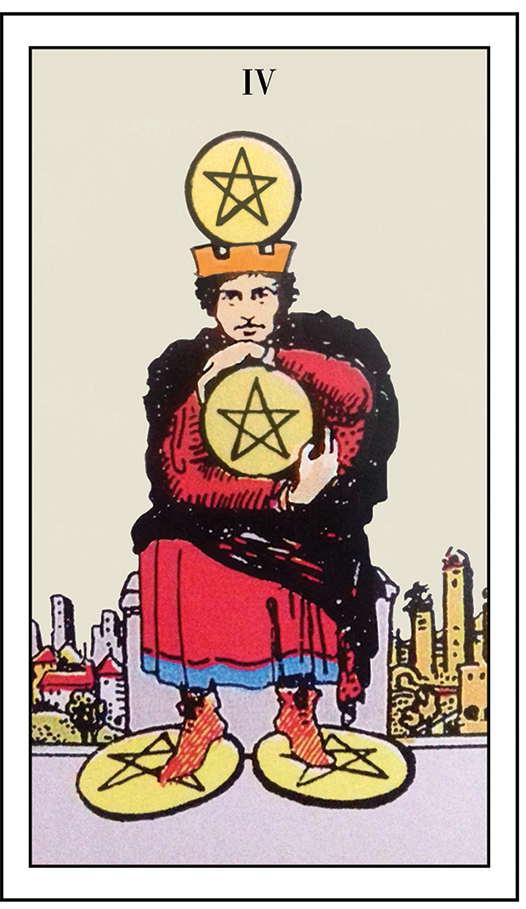
A seated figure holds one pentacle, balances another above the head and places two beneath the feet. The image can suggest protection, possession and limited movement.
Four of Pentacles upright
Upright, define what enough would mean. Clear limits can make generosity and rest possible. Notice whether a protective habit still serves a real need or has become a rule that cannot be questioned.
Four of Pentacles reversed
Reversed, consider two possible directions: releasing an unnecessary grip or feeling that stability is slipping. Use the surrounding cards and your actual circumstances to choose the reading that fits.
Love and relationships
A boundary protects your choices; control tries to determine another person’s choices. Discuss privacy, shared space and possessions without turning affection into ownership.
Work and study
Document your work and protect time for essential tasks. Also consider whether guarding information is preventing the team from doing its job.
Money and practical decisions
Review savings goals and necessary spending using real figures. Neither hoarding nor spending to prove you are generous follows automatically from this card.
Make security spacious enough for growth
The Four of Pentacles can honor the comfort of having a stable base. It also invites you to notice when protecting that base becomes constant tension. A spiritually meaningful reading may explore the difference between cherishing what you have and feeling unable to let anything move.
How it differs from nearby cards
Compare the Six for exchange and the Nine for enjoying independence.
Try this reflection exercise
- What am I protecting, and what is that protection costing me?
- Write one observation that supports your interpretation and one that challenges it.
- Choose a small action you can review after trying it, without drawing again for permission.
Four of Pentacles in a reading: an example
Imagine you have a cupboard full of craft supplies but avoid using them because you might need them later. The Four of Pentacles in a position about creative obstacles could help you choose one modest project that uses what is already yours. With the Ace of Pentacles, consider a fresh use for a resource; with the Six of Pentacles, explore sharing within a comfortable boundary. The reading is about your relationship with keeping and using, not a demand to give possessions away.
Try it in your own reading
Finish the sentence, I feel secure enough to share or use this much. A specific boundary can make generosity easier than an all-or-nothing rule.
Frequently asked questions
Is the Four of Pentacles always a sign of greed?
No. It can reflect understandable caution or a need for security. The useful question is whether the way you protect resources remains proportionate.
Explore Four of Pentacles in A. E. Waite, The Pictorial Key to the Tarot.
The interpretation of the Four of Pentacles as a balance between stability and possessiveness is thought-provoking. It’s a reminder to cherish stability but avoid clinging to material things.
It’s interesting how the Four of Pentacles in reverse suggests a shift towards minimalism. This could be a valuable insight for those feeling overwhelmed by their possessions.
The card’s advice on work and love highlights the importance of reevaluating our motivations and relationships. It urges introspection and making necessary changes for genuine satisfaction.
The past, present, and future positions of this card offer a comprehensive view of how our relationship with material possessions can shape our lives. The emphasis on letting go of the past is particularly salient.
I find the health and spirituality sections particularly enlightening. The notion that our attachment to material things can impact our mental well-being and spiritual growth is quite profound.