

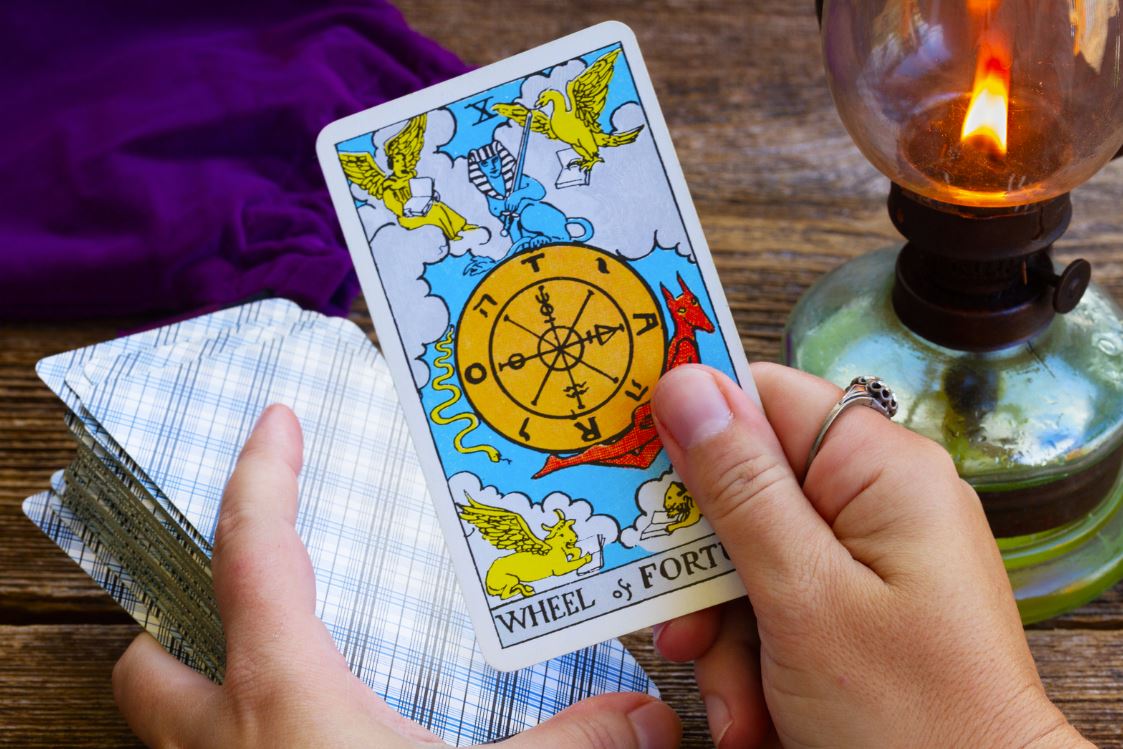
One card · A focused starting point
A single-card spread gives one question enough room to breathe. Use it to explore a perspective or a next step, not to extract a guaranteed yes or no. It works best when the question is specific and concerns something you can influence.
Lay out the cards
Place one card in front of you. Its position is the question you wrote before drawing.
Card 1
A perspective to consider
What detail in the image helps me look at my question differently? Describe the image before deciding what it means.
A worked example
For “How can I prepare for a difficult conversation?”, the Page of Swords might prompt careful questions and fact-checking. That does not reveal what the other person will say. A practical response could be writing down what you know and what you want to ask.
What this spread cannot establish
There is no universal, evidence-based yes/no answer attached to each tarot card. If your decision depends on consent, a test result, a contract or another person’s choice, obtain that information directly.
Turn the reading into a useful note
Record the card, your first interpretation and one action. Later, review whether the action helped rather than stretching events to fit the card.
Can I draw another card if I dislike the first one?
You can stop or change an exercise, but repeated draws to obtain reassurance can make the question less clear. Set a limit beforehand; if you are upset, put the cards away.
Make one card a complete conversation
A one-card reading is especially inviting when you want to listen closely rather than gather more information. Give the card three passes: notice its scene, connect one detail with your question and consider the feeling it brings up. A single image can hold several layers without requiring another draw. If the Queen of Pentacles appears when you ask how to welcome a new neighbor, her practical warmth might inspire a simple invitation rather than an elaborate event.
Keep the message focused
Write your interpretation in three sentences: what I see, what it brings to mind and what I will try. Leave the card on your journal page if you enjoy returning to its imagery. A later observation may deepen the reading without changing the question or searching for a different answer.
The suggestion to keep a personal journal is a strong point. It adds an element of reflection that can be beneficial for personal growth.
It’s intriguing how the meanings of the cards can vary so widely depending on the suits they belong to. This makes each reading unique and multifaceted.
The explanation of the Major Arcana being a ‘Journey of the Fool’ is fascinating. It seems to add a layer of depth to the readings that is absent in regular playing cards.
The connection between the Suit of Pentacles and different belief systems is quite thought-provoking. It shows how tarot incorporates a wide range of cultural and spiritual ideas.
The detailed breakdown of the different suits and how they can be interpreted is quite enlightening. Each suit seems to cover a wide range of human experiences and emotions.
Absolutely, Romeo. The categorization of the suits offers a structured way to approach complex life situations.
I agree. It’s interesting how each suit focuses on different aspects of life, making the tarot seem more holistic.