Three cards · Context, choice, possibility
A past, present and future spread can organize reflection across time without claiming to reconstruct forgotten events or forecast what must happen. Read the final card as a possible direction to consider, not a fixed outcome.
Lay out the cards
Lay three cards in a row, left to right: past, present and possible future.
Card 1
Past: context
What known experience or learned expectation may be relevant? Do not use the card to establish a hidden memory.
Card 2
Present: what is in view
What deserves attention now, and what information is missing?
Card 3
Possible future: a scenario
If an existing pattern continues, what might you need to consider? What alternative action is available?
A worked example
For a stalled project, the Eight of Pentacles, Two of Pentacles and Ten of Wands could prompt questions about skill-building, competing demands and capacity. The practical lesson might be to revise the workload—not to assume that overload is destined.
What this spread cannot establish
A past-position card cannot prove an event occurred, and a future-position card cannot establish a timeline. Use known facts and clearly label possibilities as possibilities.
Turn the reading into a useful note
Write one fact about the past, one present choice and two possible ways forward. This keeps the spread from becoming a single inevitable story.
Can I read this spread for myself?
Yes. You do not need another reader or a special belief. Keep the question focused, note your assumptions and avoid drawing repeatedly until you get a preferred future.
Read the movement between the cards
A past, present and future spread is a story of development, not three isolated labels. Ask what the past card contributes to the present and what direction the future card invites you to explore. A progression from the Page of Pentacles through the Eight of Pentacles to the Three of Pentacles could describe curiosity becoming practice and then collaboration. The sequence matters as much as the individual keywords.
Leave the future position open to participation
Write the future card as a possibility with a next step: If I keep developing this skill, I could seek useful feedback. This gives you something to engage with while leaving room for changing circumstances. Revisit the reading after an agreed period and note what you learned from the actions you took.
I found the explanations of the different Tarot suits to be quite informative. The distinctions between the elements and their symbolic meanings add a layer of depth to the readings that can be very enlightening for both novice and seasoned practitioners.
The article’s emphasis on starting a reading with an open mind and belief in the universe is essential advice for any tarot reader. It’s a good reminder that the mindset can significantly influence the accuracy and depth of a tarot reading.
The section on keeping a personal journal to document and reflect on Tarot readings is a fantastic suggestion. This practice not only aids in memory retention but also in personal growth and self-reflection over time.
The article provides a clear and structured approach to understanding the Past, Present, and Future spread in Tarot readings. The breakdown of each card’s meaning is particularly useful for those new to tarot. However, I would have appreciated a deeper dive into the interpretive nuances.
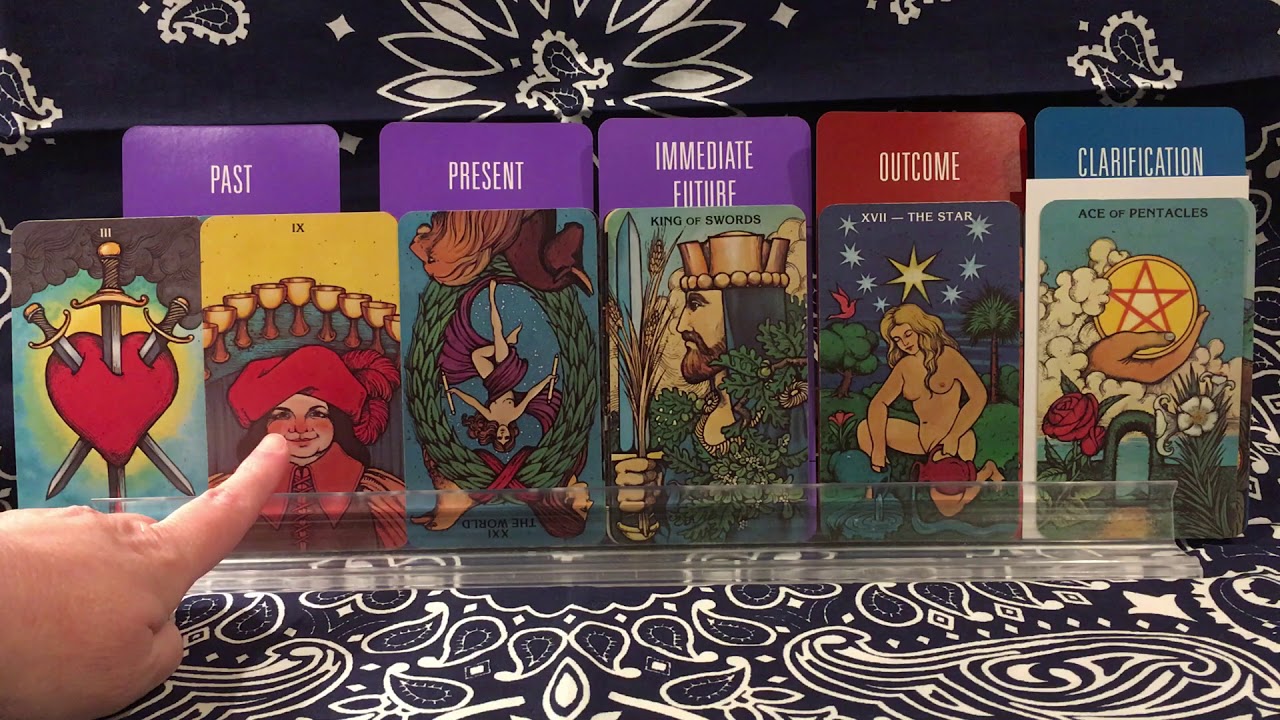
While the descriptions of the Major Arcana and Minor Arcana provide valuable insights, I think the article could benefit from examples of actual card spreads to illustrate how a reading might unfold in real-time.