

Psychic.Cards · A considered reading
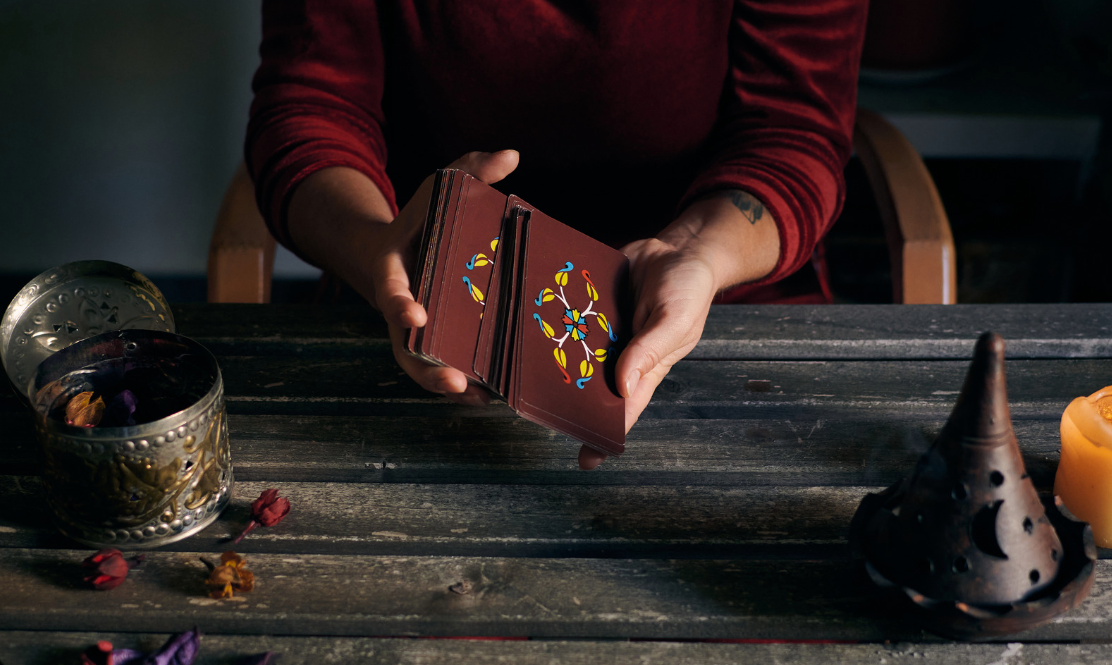
Shuffling can be a pleasant transition from everyday activity into a reading.
Find a shuffle that lets you stay with the question
Hold the deck in a way that feels comfortable and choose a method you can repeat without straining your hands or damaging the cards. You might gently move small packets in an overhand shuffle or mix the cards on a clean table. The ritual belongs to the reading you are creating, not to a competition for the most impressive technique.
Before you begin, decide whether you want reversed cards and how you will choose the draw. Then shuffle with your question in mind and stop at a comfortable point. If a large deck feels awkward, use smaller packets or a table mix. A clear, usable process helps you enjoy the reading without worrying that an ordinary handling choice has spoiled it.
How to do a gentle overhand shuffle
This method moves small packets without bending the deck. Work over a clean surface so any slipped cards are easy to retrieve.
1. Hold the deck lightly
Place the deck upright in your comfortable hand, with the other hand ready to receive cards. Keep the grip relaxed; adjust the angle if the deck feels too wide.
2. Transfer a small packet
Use your receiving hand to draw a few cards from the held deck into your palm. Move small groups rather than forcing a thick packet to separate.
3. Continue laying packets together
Repeat the transfer, letting each new packet rest against the cards already in the receiving hand. When the original hand is empty, the deck has been gathered in a new order.
4. Square and finish
Gently line up the edges on the table. Repeat only as much as you comfortably want, then cut or draw according to the method you chose. If cards catch or your hands hurt, stop and use a table mix instead.
Choose a comfortable method
An overhand shuffle, careful cutting or mixing cards on a clean surface can all be practical options. Large or stiff cards may need gentler handling. Avoid bending a deck or straining your hands to imitate someone else’s technique.
Decide how to handle reversals and dropped cards
Choose beforehand whether reversed cards or accidental “jumpers” will be part of the reading. A card falling out may simply reflect handling. It is not automatically a message that overrides your planned spread.
Use an ordinary stopping point
Finish after a set amount of mixing or when you are ready to proceed. No sensation proves that the correct cards have arrived. If you keep shuffling to escape a feared result, pause and reconsider whether a reading is useful right now.
Put it into practice
- Write the question and positions.
- Mix the deck comfortably.
- Draw the planned number and keep the first result in your notes.
While the various shuffling techniques are well-explained, I would have appreciated a bit more detail on the historical context of these practices. Understanding their origins could add depth to the practice.
The importance of transferring personal energy into tarot cards cannot be overstated. The article offers a variety of shuffling techniques to suit different preferences and needs, which is beneficial for both novice and experienced readers.
Indeed, understanding these techniques can significantly improve the reading experience. The mention of different shuffling methods caters to the practical needs of diverse individuals.
While the methods are comprehensive, I wonder if there are empirical studies that support the transfer of energy or if this is more about the reader’s mindset.
As someone new to tarot, I find the breakdown of shuffling methods and the rationale behind them extremely helpful. The combination of practical advice and spiritual guidance makes this a comprehensive resource.
The suggestion to cleanse the cards and oneself using methods like smudging or salt baths is quite practical. It’s vital to maintain the purity of the reading environment to mitigate any lingering negative energies.
The article provides a thorough guide on shuffling techniques, which is often overlooked in other guides. The emphasis on feeling the energy from the cards is an interesting approach to ensuring a meaningful connection during the reading.