

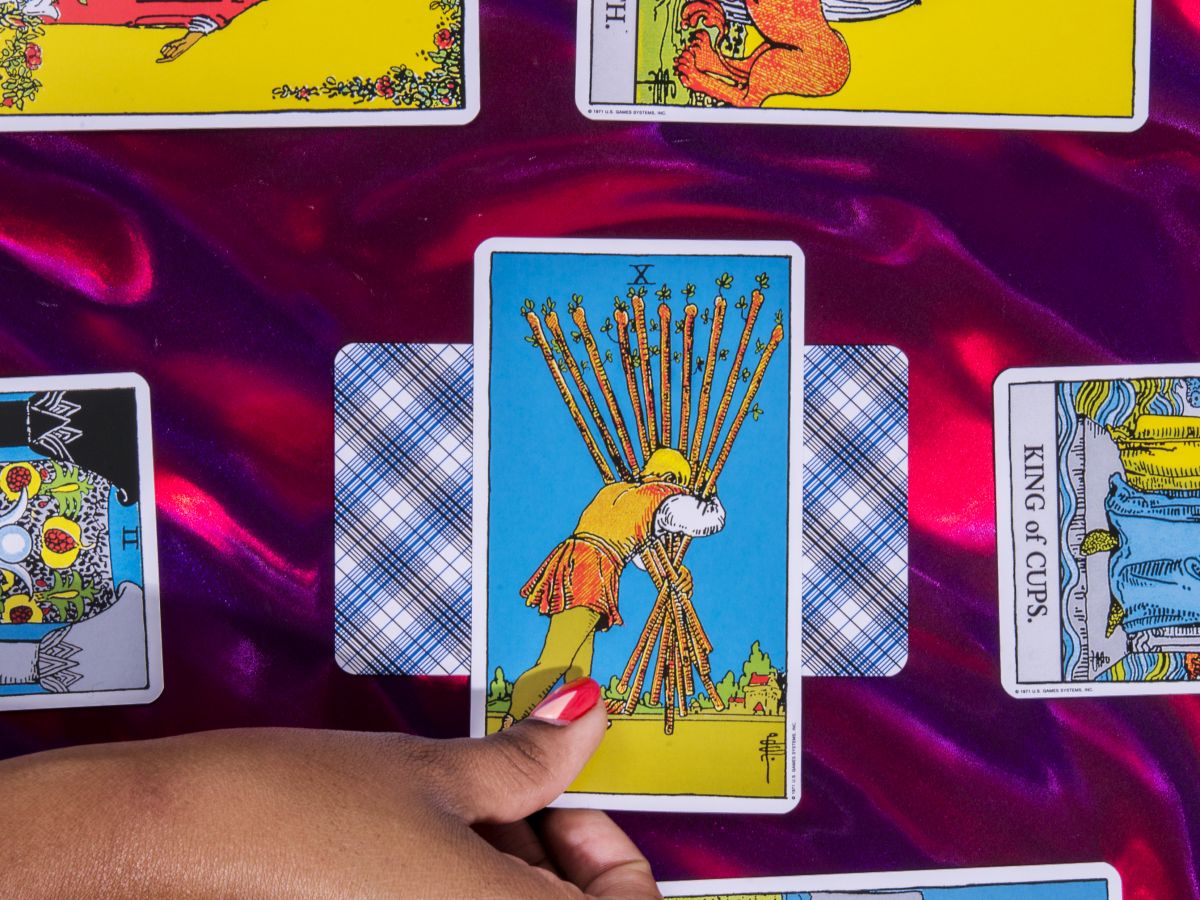
Seven cards · Gentle reflection after loss
Loss can involve a person, relationship, role, home or hoped-for future. This optional seven-card spread offers prompts for acknowledging your experience and identifying support. It cannot explain why a loss happened, contact someone who has died or prescribe how you should grieve.
Before you draw
Write a focused question, decide whether you will use reversed cards and set a comfortable stopping point. Shuffle in a way that works for you. You do not need to clear every thought or achieve a special state for a reflective exercise.
Lay out the cards
Lay four cards in the first row and three below. Read in order, or use only one prompt if seven feels like too much.
Card 1
What is present
What feeling or practical concern can I name today?
Card 2
What matters
What do I want to remember or honor?
Card 3
What I need
What kind of support would be welcome?
Card 4
What can wait
Which expectation can I set aside for now?
Card 5
A connection
Who or what resource could I approach?
Card 6
A small act of care
What manageable action fits today?
Card 7
Permission
What do I need to allow myself without a deadline?
A worked example
The Five of Cups might help you name disappointment or sadness without demanding that you look for a benefit. The Six of Cups could prompt a memory or an act of remembrance; it is not proof of a message from the deceased.
This is an illustration of how to form questions, not a forecast or a claim that these cards describe your life.
What this spread cannot establish
Do not use cards to assign blame, establish a cause of death or pressure yourself toward closure. If the exercise intensifies distress, stop. Support from trusted people or qualified grief and mental-health professionals can be more appropriate.
Turn the reading into a useful note
Choose only one gentle next step. It can be practical, such as asking for help with a task, or reflective, such as writing down a memory. There is no required emotional outcome.
What if I draw a frightening card while grieving?
You can put it away. A card does not predict another loss or tell you that you are grieving incorrectly. You do not owe the exercise your attention.
The detailed explanation of the tarot spreads and the suits is quite enlightening. It provides a structured approach to understanding how to deal with loss through the cards.
The article does a good job of breaking down the complexities of tarot card reading into understandable segments. The advice on maintaining an open mind and journaling can be quite beneficial.
Organizing thoughts and emotions through tarot cards seems like a therapeutic practice. The article offers a comprehensive guide for those new to tarot reading.
The exploration of each suit and its elements is very informative. The guidance to journal about one’s experiences adds a dimension of self-reflection and growth.
It’s interesting how each tarot card suit represents different aspects of life like thoughts, emotions, wealth, and energy. This methodical approach could be helpful for personal introspection.