


Psychic.Cards · Relationships in practice
Use these qualities as conversation prompts, not a compatibility score or a demand for perfection. Look at repeated behavior, mutual choice and room for both people to remain themselves.
One of the most important decisions people ever make is finding a long-term partner. This is the person who will influence your daily experience, emotional stability, personal growth, and your overall life direction. Finding the right partner means they will be your support system and help you make decisions and work together on your future plans.
Even though initial attraction is what normally brings two people together, it’s deeper qualities that decide if a relationship will last or not. Long-term compatibility is more than just sharing the same interests; it requires having the same values, emotional maturity, and being able to work through life together when it’s easy and when it’s hard. The right partner isn’t just someone you like being with, but someone who betters your life in a meaningful and sustainable way.
By knowing what matters and having a partner, you move beyond surface-level attraction and make more intentional choices. It also helps you see the difference between the temporary excitement of finding a partner and the long-term potential of keeping a partner.
Picking the Right Partner Matters
Here is why picking the right partner matters:
Overall Life and Wellbeing
Your relationship is more than just romance, and it directly impacts your emotional resilience, mental health, productivity, and even your own sense of identity. When you are with the right partner:
- You feel encouraged to grow.
- You have stability instead of uncertainty.
- You have confidence instead of self-doubt.
- You feel emotionally supported and not drained.
On the other hand, being with the wrong partner can cause confusion, stress, and emotional fatigue. Over time, this can affect how you make decisions, your energy level, and even how you see yourself. A relationship is one part of well-being, not a requirement for a complete or meaningful life.
Long-Term Compatibility
Long-term compatibility isn’t just about having the same personality or agreeing on everything. It’s about how you work together as time goes on, especially during hard times. This includes things like:
- How you show respect when frustrated.
- How you support each other’s goals.
- How you deal with disagreement.
- How you fix conflict.
- How you communicate when emotions are high.
Being in a strong relationship doesn’t mean that there won’t be conflict, but it means being able to handle conflict in a healthy way. Compatibility isn’t about being in a perfect situation, but it’s about how you deal with the imperfect situations together.
15 Important Qualities in a Long-Term Partner
Here are 15 qualities that you should look for in a long-term partnership:
1. Emotional Awareness
A strong partner understands their own emotions and pays attention to yours, too. They don’t ignore how you feel, but they take time to understand it. This creates emotional safety, and that’s what helps trust and closeness grow over time.
2. Shared Values
When you and your partner want similar things in life, it makes everything feel more aligned in your relationship.
This includes things like:
• Family and relationships.
• Lifestyle and priorities.
• Financial decisions.
• Long-term goals.
When those things match up, decisions feel easier, and the relationship feels steadier.
3. Respectful Communication
It’s not about how often you talk, but it’s about how you talk to each other.
A strong partner:
• Says what they mean clearly.
• Listens without interrupting.
• Stays present even during hard conversations.
This creates a space where both people feel heard and understood.
4. Building Trust Over Time
Trust builds over time through actions, not just words.
A trustworthy partner:
• Does what they say they’ll do.
• Is honest, even when it’s uncomfortable.
• Keeps healthy boundaries.
This creates a feeling of security in the relationship.
5. Emotional Openness
A partner who is emotionally open doesn’t avoid deeper conversations.
They will:
• Share what they’re feeling.
• Allow themselves to be vulnerable.
• Stay present when things get emotional.
This creates a deeper connection between you.
6. Growing As Life Changes
Life changes, and relationships have to grow with it.
A strong partner is open to things like:
• Learning new things.
• Working on themselves.
• Growing with the relationship instead of against it.
This helps the relationship stay strong over time.
7. Positive Mindset Even When Times Are Hard
No relationship is perfect, and challenges are going to happen.
• Looks for solutions instead of focusing only on problems.
• Stays hopeful during hard moments.
• Brings a sense of balance when things feel heavy.
This creates a more stable environment.
8. Physical and Emotional Affection
Affection helps keep the connection strong.
This can look like:
• Physical touch.
• Emotional warmth.
• Saying how you feel out loud.
These small things create closeness over time.
9. Healthy Conflict
Disagreements happen, but it’s how you handle them that matters.
A strong partner:
• Stays calm instead of reacting.
• Focuses on fixing the issue.
• Avoids hurtful or personal comments.
This prevents resentment from building.
10. Kindness In All Situations
Kindness isn’t just for big situations, but it shows up in small ones, too.
A kind partner:
• Shows care during difficult moments.
• Speaks in a respectful way.
• Has patience, even when things aren’t perfect.
This creates a more supportive relationship overall.
11. Supporting Growth
The right person wants to see you do well in life.
They will:
• Celebrate your wins.
• Encourage your goals.
• Stay by your side when things are hard.
This creates strength in both the relationship and you as a person.
12. Independence and Setting Boundaries
A healthy relationship is made up of two whole people, not one identity.
A strong partner:
• Maintains their own individuality.
• Respects personal space and limits.
• Supports your independence too.
This keeps the relationship balanced.
13. Being Consistent Matters
Consistency matters more than big gestures.
A reliable partner:
• Shows up the same way over time.
• Follows through on what they say.
• Creates stability in the relationship.
This creates emotional security.
14. Taking Responsibility
Everyone makes mistakes, but how someone handles them matters.
A responsible partner will:
• Own their actions.
• Learn from what went wrong.
• Won’t shift blame onto others.
This builds respect and trust.
15. Shared Effort
A strong relationship takes effort from both people.
A committed partner will:
• Put in time and energy.
• Work through challenges instead of avoiding them.
• Choose the relationship every day.
This is what creates something that lasts.
Looking for Red Flags
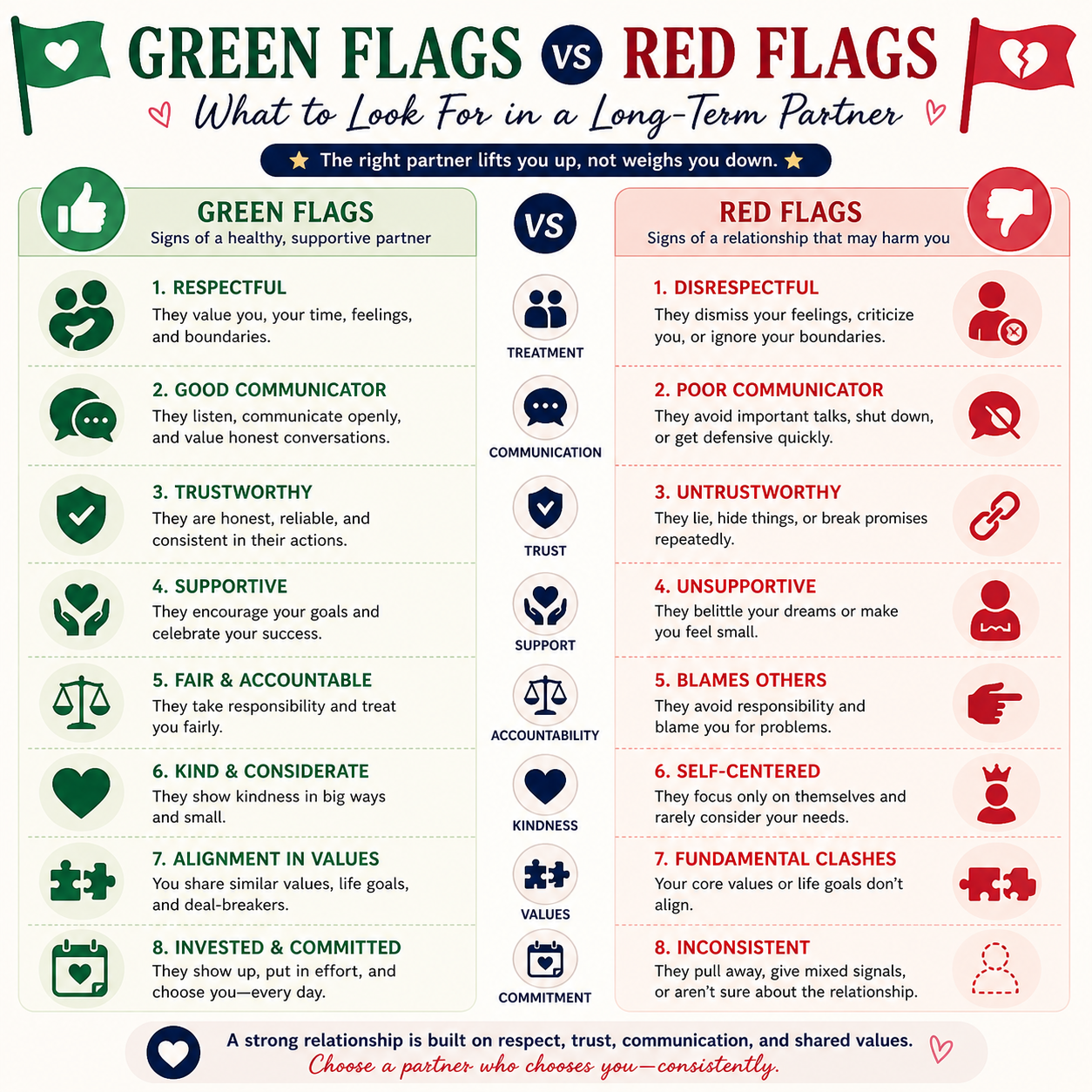
These are some red flags to look out for:
Control or Disrespect
Control might start out small, but it grows over time. A healthy relationship includes mutual respect without control.
Avoiding Hard Conversations
Avoiding hard conversations prevents the relationship from growing. A strong relationship means having open communication even when it’s hard.
Different Life Goals
Big differences in long-term goals can create tension. It’s important to know these different life goals early on in the relationship.
Evaluating Your Partnership As Time Goes On
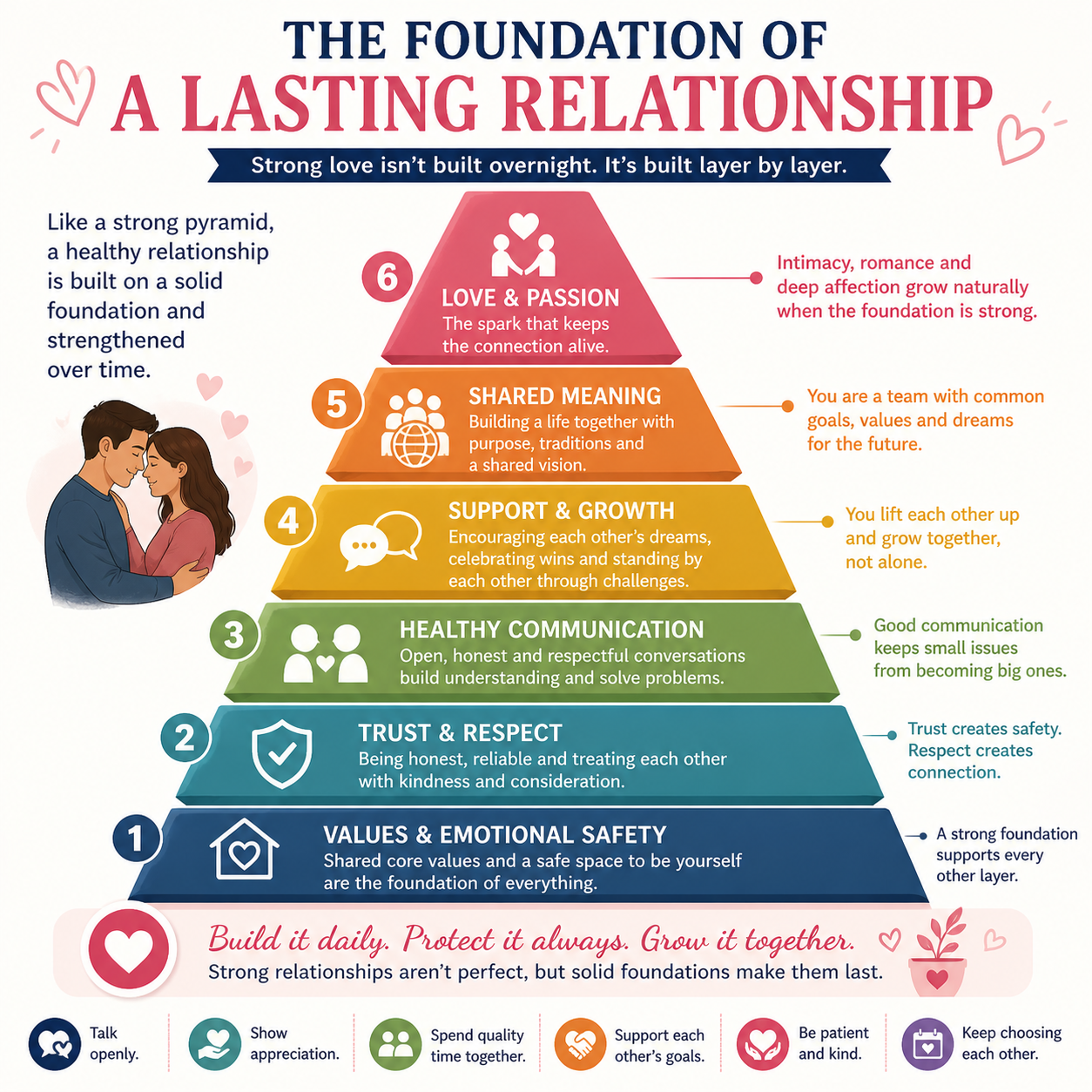
Here are some ways you can evaluate your partnership as time goes on:
Look for Patterns
Being consistent matters way more than words. Pay attention to how your partner acts over time, especially when there are times of stress or conflict.
Notice How You Feel
Pay attention to your own emotions. Ask yourself these questions:
- Do I feel supported?
- Do I feel secure?
- Do I feel valued?
These feelings can show how the relationship is going.
Build a Strong Relationship
A strong relationship is built on emotional connection, respect, and shared effort. This requires adapting to one another, open communication, and a willingness to grow together as time goes on.
Final Thoughts: Partners Are More Than Attraction
Picking a partner should be less about how attracted you are to them and more about compatibility, emotional connection, and trust. A supportive partner can encourage your growth, respect you as an individual, communicate openly with you, and be consistent in their actions.
A strong relationship doesn’t just happen overnight, but it’s built on understanding, commitment, and effort.
Frequently Asked Questions
1. What should you look for in a long-term partner?
Look for trust, respect, emotional maturity, kindness, shared values, healthy communication, reliability, and a willingness to grow together through both easy and difficult seasons.
2. Why is trust important in a long-term relationship?
Trust creates emotional safety. When you can rely on your partner’s honesty, consistency, and intentions, the relationship feels more secure and less stressful.
3. Are shared values more important than chemistry?
Chemistry matters, but shared values usually matter more for long-term success. Attraction can start a relationship, but values help guide decisions, goals, commitment, and daily life together.
4. What are green flags in a long-term partner?
Green flags include emotional availability, honesty, kindness, consistency, accountability, respect for boundaries, supportive behavior, and open communication.
5. What are red flags in a long-term partner?
Red flags include dishonesty, disrespect, controlling behavior, constant blame, poor communication, emotional inconsistency, lack of accountability, and repeated boundary violations.
6. How important is communication in a lasting relationship?
Communication is essential because it helps partners resolve conflict, express needs, understand each other, and prevent small problems from becoming larger issues.
7. What does emotional maturity look like in a partner?
Emotional maturity looks like self-awareness, calm communication, accountability, empathy, patience, and the ability to handle conflict without cruelty, avoidance, or manipulation.
8. Should long-term partners have the same life goals?
They do not need identical goals, but their major life goals should be compatible. Differences are easier to manage when both people respect and support each other’s direction.
9. Why does kindness matter in a partner?
Kindness matters because daily love is built through small actions. A kind partner makes you feel respected, considered, emotionally safe, and valued over time.
10. Is physical attraction enough for a lasting relationship?
No. Physical attraction can be important, but it is not enough by itself. Long-term love also needs trust, communication, respect, shared effort, emotional closeness, and compatibility.
11. How do you know if someone is reliable?
A reliable partner follows through, keeps promises, communicates honestly, shows up during difficult moments, and behaves consistently rather than only when things are convenient.
12. What role does respect play in a relationship?
Respect helps both partners feel valued as individuals. It includes honoring boundaries, listening without dismissing, speaking with care, and treating each other fairly.
13. Can different personalities work in a long-term relationship?
Yes. Different personalities can work well when both partners communicate clearly, respect differences, share core values, and support each other’s emotional needs.
14. What does healthy conflict look like?
Healthy conflict includes listening, staying respectful, taking responsibility, avoiding insults, looking for solutions, and repairing the connection after disagreement.
15. How can you tell if a partner supports your growth?
A supportive partner encourages your goals, celebrates your progress, respects your independence, and wants you to become more confident, fulfilled, and authentic.
16. Why is accountability important in a partner?
Accountability matters because every relationship will face mistakes and misunderstandings. A good partner can admit when they are wrong, apologize sincerely, and work to do better.
17. Should a long-term partner make you feel emotionally safe?
Yes. Emotional safety is one of the strongest signs of a healthy relationship. You should feel able to express feelings, needs, fears, and concerns without being mocked, punished, or ignored.
18. What if someone has good qualities but poor communication?
Poor communication can improve if both people are willing to learn. However, if one partner refuses to listen, avoids every hard conversation, or dismisses your needs, the relationship may struggle long term.
19. How long does it take to know if someone is right for you?
There is no exact timeline. What matters most is observing consistent behavior over time, especially during stress, disagreement, disappointment, and important decisions.
20. What is the most important quality in a long-term partner?
There is no single quality that guarantees success, but emotional safety, trust, respect, communication, and shared values are among the most important foundations for lasting love.
Turn a quality into an observation
Choose three qualities and write what each would look like in daily life. Then note examples, exceptions and questions to discuss. An isolated mistake is different from a repeated pattern, and a list of positive traits does not cancel threats, coercion or a refusal to respect your boundaries.
For a practical explanation of personal, physical and digital limits, see love is respect’s boundary guide.
Wow, this post helped me a lot. Picking someone to be with long time is big. I like how it says things like being kind, honest, and steady matter more than looks. I want someone who supports me and helps me grow every day 😊
I really appreciate the comprehensive breakdown here; it elevates the conversation beyond superficial attractions to the ethics and mechanics of sustained partnership. Emphasizing mutual accountability, consistent comportment, and deliberate communication reframes romantic choice as a practice of flourishing rather than mere compatibility testing. Thoughtful and practical. ✨
Nice post, man. I like how it says trust and showing up matter way more than fireworks. Stuff like respect, listening, and shared goals sounds simple but really important. Gonna keep these tips in mind when dating and looking for real partnership 🙂
Totally agree — consistency beats drama every time. Small, steady actions build trust and make day-to-day life predictable and safe, which matters so much. Appreciate the reminder to value the quiet gestures as much as the big romantic moments. Solid advice! 👍
This is an excellent synthesis of relational priorities, coupling empirical wisdom with actionable guidance. I particularly appreciate the emphasis on structural trust—how routine behaviors scaffold long-term security—and the call for mutual responsibility, which reframes repair as a collaborative skill rather than a personal failing. Insightful piece. 🌟
This is a great summary of what matters most when choosing a partner. I especially appreciated the focus on consistency, emotional openness, and shared values — those are game changers. Practical tips and red flags are helpful for spotting unhealthy patterns early on. Thanks! 🌟
Robin, your take captures the balance between emotional depth and everyday reliability so well. I value the idea that growth together requires curiosity, accountability, and patience — practical virtues that sustain intimacy over years. This post gives useful language for those conversations. 💬🌿
Thanks for putting this together — very useful. It reminds me that real love needs work, respect, and shared plans, not just fun dates. I’ll keep an eye out for people who listen, stay kind, and show up consistently in small ways 😊
What resonates most for me is the insistence that partners remain autonomous yet committed; it’s a delicate dialectic that supports both individual growth and shared endeavor. The checklist of behaviors—accountability, emotional literacy, and consistency—provides a practical toolkit for cultivating durable intimacy. Very useful post! 🌺
This article lists so many helpful traits to look for in a life partner. I loved the focus on kindness, communication, and shared goals — those three alone can change outcomes. I’ll be bookmarking this to revisit when evaluating my own relationships. Thanks for sharing! 💕