

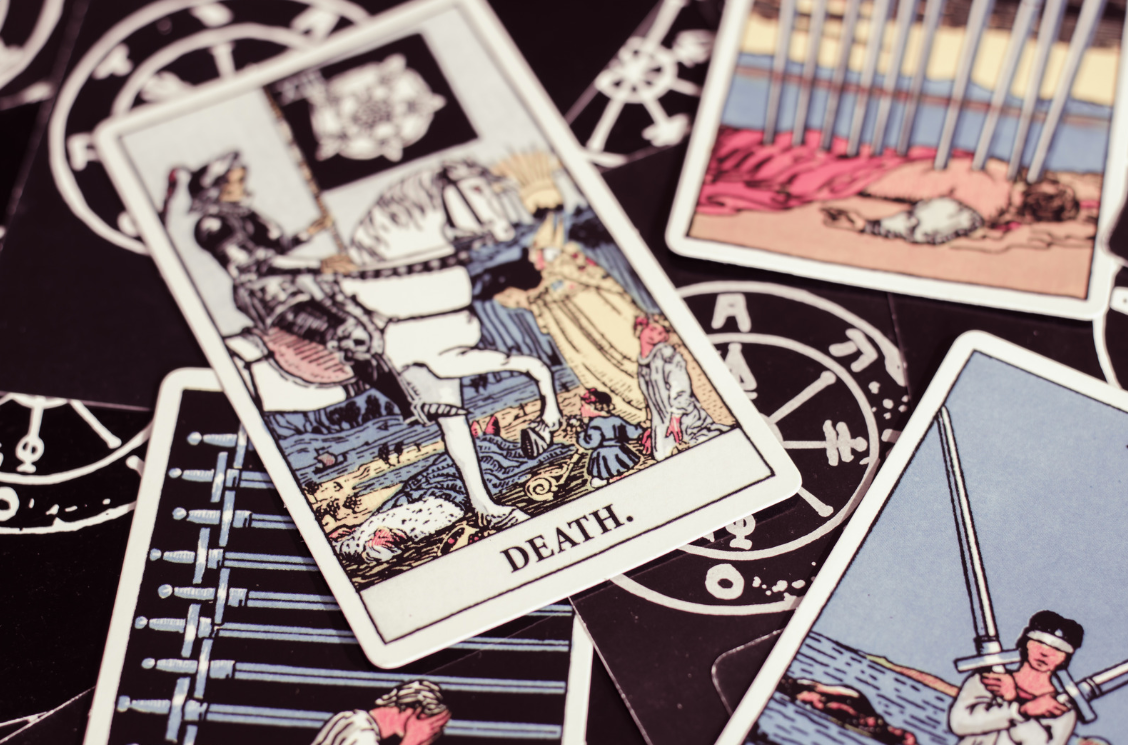
Card interpretation · A practical perspective
The Death card does not establish that you or someone else will die. It is a symbolic image that many readers use to explore endings and transitions, not a source of medical information or a forecast of loss.
Start with what is already changing
A role, routine or expectation may be ending. Naming the specific change prevents a dramatic image from becoming a frightening story about everything in your life.
You can decline the interpretation
If the image is distressing or does not fit, set it aside. You do not need another paid reading to neutralize it. Health and safety concerns deserve appropriate real-world care, not a symbolic verdict.
Put it into practice
- Identify a known transition, if one is relevant.
- Name what continues as well as what ends.
- Choose one source of practical or emotional support.
Historical reference: A. E. Waite, The Pictorial Key to the Tarot. Practical suggestions are contemporary reflection prompts.
Honor transformation through a meaningful transition
Death in tarot often invites a conversation about change, release and the space between chapters. This article focuses on how to honor a transition rather than rush toward its replacement. A familiar routine may have given you something valuable even when it is no longer the right fit. You can recognize that gift while welcoming a different form of life.
Give the old chapter a closing gesture
Write what you learned, what you want to carry forward and what you are ready to stop maintaining. Choose a gentle action that marks the shift: reorganize a workspace, finish a journal page or share thanks with someone who helped. Renewal can begin with acknowledgment rather than dramatic action.
I appreciate how the article demystifies the Death card, showing it as a signal for change rather than an omen of physical demise. This perspective can certainly help in alleviating the anxiety often associated with this card.
It’s intriguing to see how the Death card is tied to the natural cycle of life, death, and rebirth, aligning with various cultural beliefs about the necessity of endings. This holistic view can offer comfort and clarity during times of transition.
The link drawn between the Death card and the grieving process is insightful. Understanding that grief creates space for new beginnings can be a profound takeaway for those navigating personal losses.
Indeed, the notion that grieving is essential for transformation can offer solace. It implies that the pain of endings is not only natural but necessary for personal growth and renewal.
The discussion on the correlation between the Death card and Scorpio’s transformative qualities is compelling. The notion that endings pave the way for new beginnings is a valuable lesson for everyday life.
The article provides a thoughtful interpretation of the Death card, moving beyond the literal to explore its broader symbolic meanings. The emphasis on endings and transformation resonates with the deeper philosophical aspects of Tarot.