

Psychic.Cards · A considered reading
Tarot combines a deck, an interpretive system and a question. Learning how those parts work together is more useful than trying to memorize a guaranteed answer for every card.
Know the structure
A standard deck has 22 Major Arcana and 56 Minor Arcana across four suits. In many modern decks, each suit includes Ace through Ten plus Page, Knight, Queen and King. Names and artwork vary, so begin with your deck’s guide.
Read in a consistent order
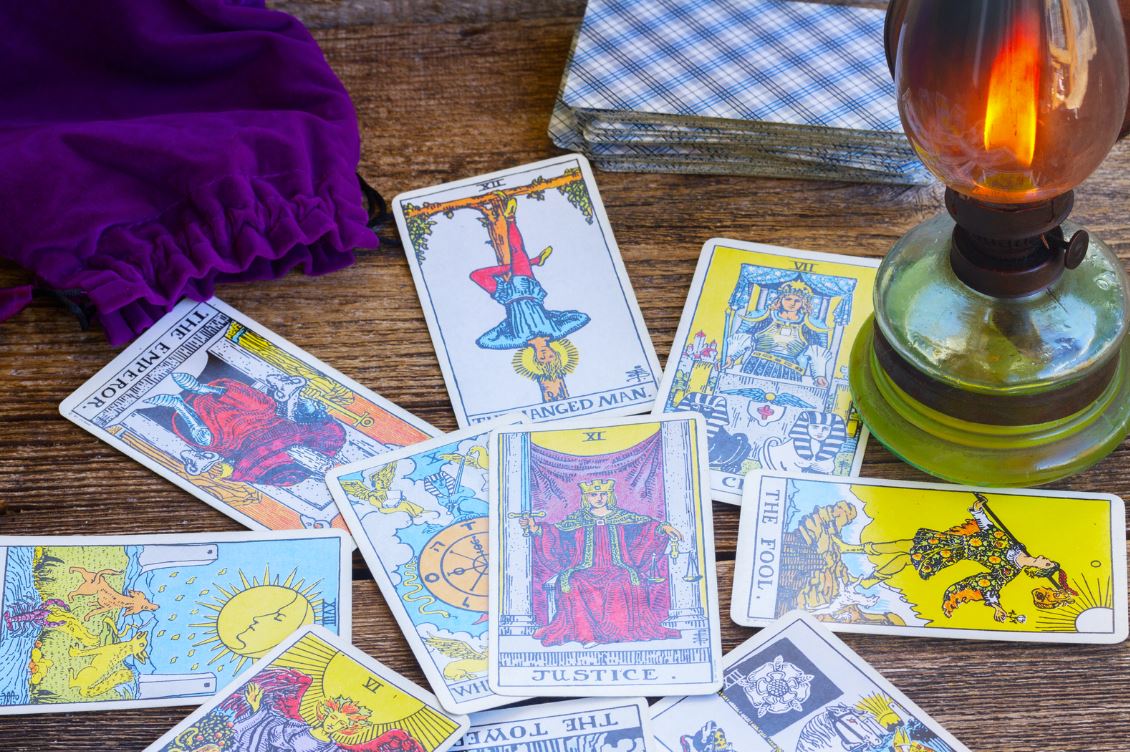
State the question and position first. Describe the image, consult a few relevant meanings, and consider more than one interpretation. For “What should I prepare?”, a card about resources can invite a checklist rather than predict money arriving.
Keep the answer proportionate
The cards cannot establish another person’s feelings, diagnose a condition or decide a legal or financial matter. A useful reading ends with a question to clarify or an action you choose—not an obligation to obey the image.
Practice one card before a large spread
Record your question, interpretation and next step. Review whether the action helped. You are learning an interpretive craft, not measuring your worth or proving that every coincidence was a message.
Put it into practice
- Ask an open question about your choices.
- Draw one card and describe it.
- Write two possible meanings and one practical next step.
The historical context provided in the article is intriguing. The evolution from a gaming tool to a mystical divination device demonstrates the adaptability of cultural artifacts. I find the artistic aspect of tarot cards particularly fascinating as it adds a layer of interpretive richness.
The differentiation between the Major and Minor Arcana is well explained. It’s interesting how the cards can represent both significant life events and everyday occurrences. This duality adds depth to the practice of tarot reading.
The comparison between different types of tarot decks, such as the Rider-Waite and Aleister Crowley Thoth decks, is very informative. It provides a good starting point for anyone looking to select a deck that resonates with them on a personal level.
The mention of the need for intuition in interpreting tarot cards is crucial. It aligns with many forms of subjective reasoning where personal insight and emotional intelligence play significant roles. The process described for conducting a reading is quite methodical.
I appreciate the detailed explanation of how to perform tarot readings and the different spreads. It’s helpful for beginners to have a step-by-step guide. The emphasis on shuffling and meditating aligns well with many practices of mindfulness and focus.
I agree, the guidance on preparing the deck and focusing on the querent’s questions adds a ritualistic, almost meditative quality to the practice. It could be beneficial in centering oneself before a reading.
Indeed, the use of meditation and deliberate preparation can enhance the accuracy and the overall experience of the reading. It’s a practice that can be deeply personal and insightful.