

Psychic.Cards · A considered reading
The best shuffle for your practice is one you can handle comfortably with the deck you own.
Compare handling methods through comfort and card care
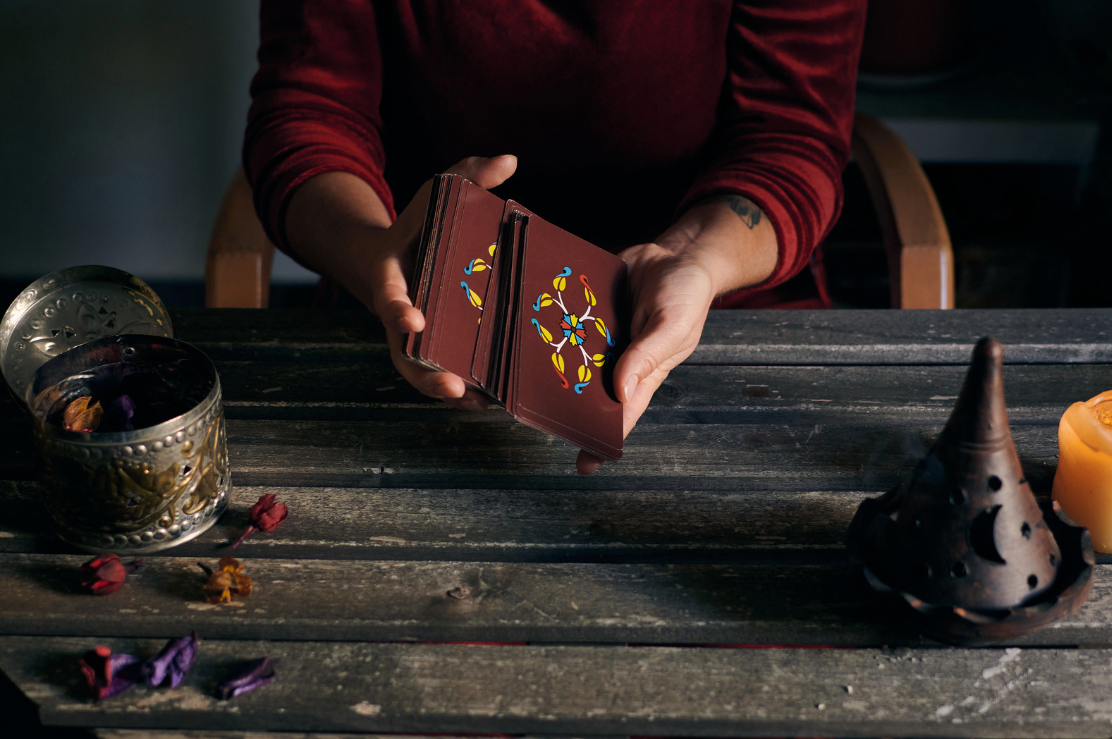
A large, thick deck may behave differently from a smaller flexible one. Try an overhand shuffle, a gentle table mix or dividing the deck into packets, and notice which method gives you a relaxed, repeatable experience. There is no need to force a technique that bends the cards or strains your hands.
Test each method on a clean surface without drawing a reading. Check whether you can keep the cards together, whether corners catch and whether you want to introduce reversals. Choose the method that works, then use it consistently for a few sessions. This article focuses on the handling choice; the spiritual intention can remain the same whichever comfortable method you select.
Overhand, cut or surface mix
An overhand shuffle moves small groups from one hand to the other. Cutting rearranges packets. A surface mix spreads cards on a clean, dry table before gathering them. These methods suit different preferences; none establishes predictive accuracy.
| Method | How to begin | When it may suit you |
|---|---|---|
| Overhand | Transfer small packets from one hand into the other, then square the deck. | A deck you can comfortably grip; easy to keep cards upright. |
| Packet shuffle | Place several stacks on a clean table and gather them in a different order. | Large or stiff cards; a simple way to rearrange the deck without bending it. |
| Surface mix | Spread face-down cards on a dry table, gently move them around and gather them. | Limited hand grip or a preference for introducing different orientations. |
Consider orientation
If you do not use reversals, keep the cards facing one direction. If you do, decide how you will introduce reversed orientations before starting. Consistency makes your notes easier to understand later.
Keep ritual optional
A quiet moment may help you focus, but prayer, crystals or a special number of shuffles are not required. Treat a dropped card according to a rule chosen beforehand rather than deciding its significance only after seeing whether you like it.
Put it into practice
- Check card size and table space.
- Choose whether to include reversals.
- Use a repeatable routine and stop when the planned mixing is complete.
This article provides a comprehensive guide for those new to tarot card reading. The steps are clearly explained, and there’s flexibility in methods, allowing readers to find what works best for them. A valuable resource for both novices and seasoned readers alike.
The emphasis on shuffling to connect with spiritual energies and cleanse the deck is quite enlightening. It seems that the act itself serves as a meditative process, aligning both the reader’s energy and intentions. This provides a robust foundation for accurate and meaningful readings.
The importance of meditation and focusing on the question while shuffling is well-articulated. It underscores the need for mental clarity and connection with one’s spiritual guides, which can be crucial for an effective tarot reading.
I found the section on cleansing the deck particularly useful. Removing any residual energy from previous handlers could indeed improve the accuracy of the readings. Using smudging techniques like sage or palo santo seems like a practical approach.
The idea that the left hand is associated with feminine energy and intuition is fascinating. It makes sense that using the non-dominant hand could help tap into deeper intuition. This insight adds a unique layer to the card-reading process.