Psychic.Cards · Reflection with perspective
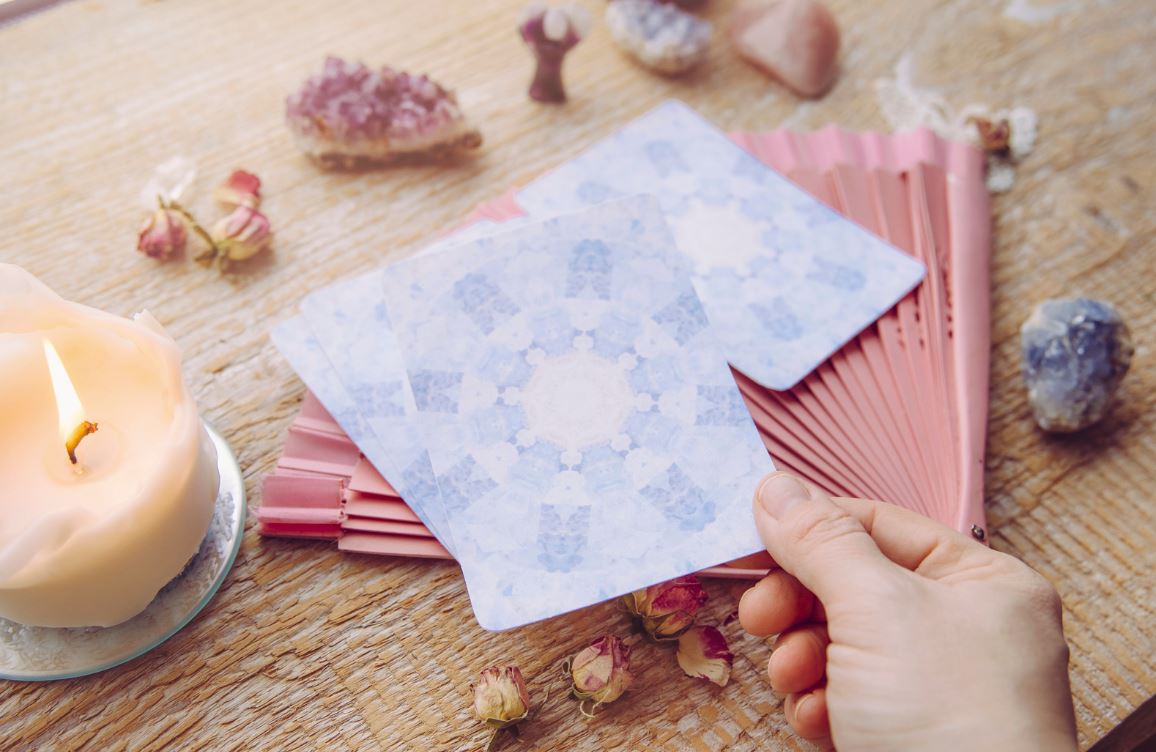
Angel cards are oracle decks built around reassuring words and spiritual imagery. Some people view them devotionally; others use them as journaling prompts. A card cannot verify that an angel sent a message.
Let the message meet your experience
Read the entry carefully, then describe the part you can sincerely connect with. You do not have to accept a message unchanged because it appears on a card. A personal response can be respectful of the tradition while remaining honest about your own feelings.
If a card emphasizes forgiveness, ask what that word means in the situation and whether it is something you are ready to explore. It need not require renewed contact or the removal of a boundary. A gentle message should leave room for your pace, your choices and the practical support you need.
A grounded way to draw a card
- Choose an open question about your own values or choices.
- Draw one card and describe its words and imagery.
- Write two possible interpretations, not just the first.
- Identify one practical action supported by real-world evidence.
Avoid certainty claims
Do not treat a card as permission to spend money, end treatment, contact someone who asked for space or ignore a safety concern. Encouragement can be meaningful without being supernatural instruction.
Choose readers carefully
Ask about price, duration and privacy. Leave if a reader guarantees divine approval, uses fear or insists that only additional paid sessions can protect you.
The best use of an angel card preserves your freedom to question, decide and seek qualified help.
Use a word-to-action journal
Copy the card’s central word, describe your personal association and name one small action. “Patience” might mean checking a real deadline before following up; it need not mean waiting indefinitely for someone who has declined contact. Review the action, not whether the universe rewarded it.
I appreciate the inclusion of practical tips for proper storage and handling of angel cards. The emphasis on personalization and creating a connection with the cards is crucial for a meaningful experience.
It’s intriguing how the article highlights the flexibility in using angel cards, whether mixing packs or incorporating various ritual elements like candles and crystals. This allows users to tailor their practice to their preferences.
The article provides a comprehensive guide to using angel cards, making it accessible even for beginners. It’s interesting to see how these cards can be used by people of all ages and have a positive and uplifting nature compared to Tarot cards.
The detailed explanation about setting up a reading table and the various layouts for readings was quite informative. It’s clear that angel cards are presented in a user-friendly way, making them easy to integrate into daily routines.
Recording readings in a journal is a valuable suggestion for tracking patterns and accuracy. This systematic approach can enhance one’s understanding and interpretation of the messages received through angel cards.