Psychic.Cards · A considered reading
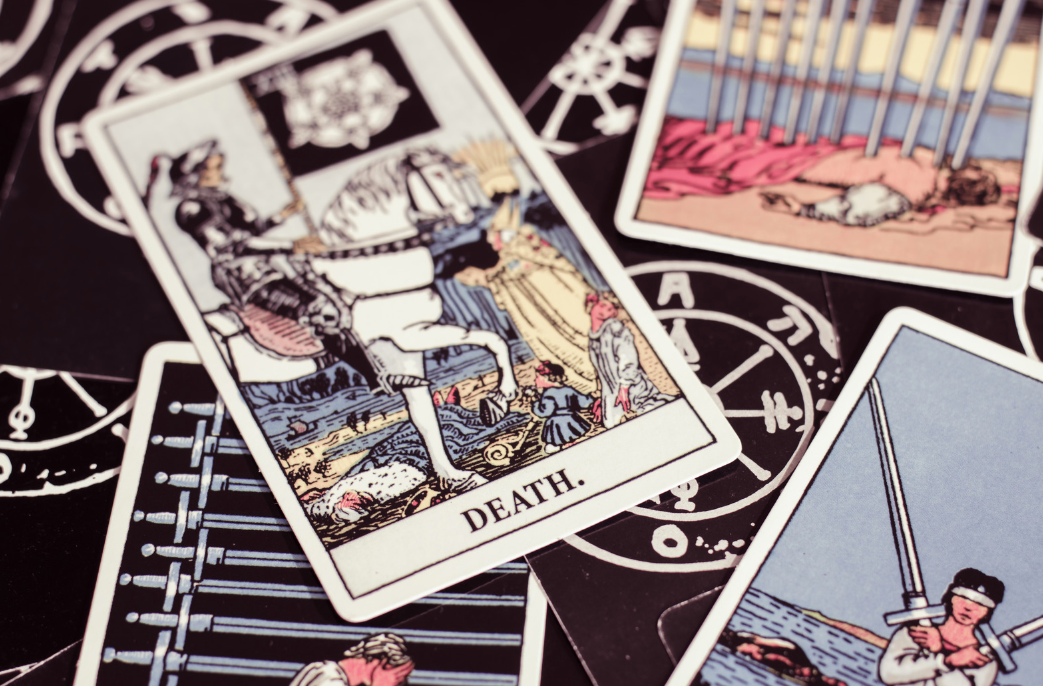
These dramatic cards can open different conversations: Death about transition, the Devil about attachment and the Eight of Swords about feeling restricted.
Distinguish the three questions
Reading them as interchangeable bad news loses those distinctions. Begin with the question each image invites and connect it with a recognizable part of your situation.
For a creative project, Death might ask what approach has ended, the Devil what habit keeps drawing you away and the Eight of Swords which obstacle can be examined separately. Choose a compassionate response to the actual question. None of these images requires you to forecast harm or blame yourself for difficulty.
Death: endings without a promised replacement
Consider what is changing, what is already over or what deserves a deliberate transition. The card does not guarantee that everything will improve once you let go. Some endings require grief, time, support and practical planning.
The Devil: examine the bind without blame
Ask about a habit, pressure or agreement that limits freedom. Do not conclude that a person can simply walk away from abuse, addiction or hardship. Real constraints matter, and appropriate professional or community support may be necessary.
Eight of Swords: map the actual constraints
Distinguish uncertainty or self-doubt from external restrictions such as money, safety or access. The blindfolded figure can invite a new perspective, but it should never be used to tell someone that their difficulties are imaginary. A small available option is different from total control.
Put it into practice
- Describe what actually worries you in the image.
- List one possible metaphor and one alternative.
- Choose support or a practical step; stop the reading if it increases distress.
Interpreting The Death Card as a metaphor for rebirth rather than an ominous sign can significantly change one’s outlook. It fosters an understanding that change, though challenging, can lead to positive outcomes.
The interpretation of these Tarot cards provides a fresh perspective. It’s intriguing to see The Death Card as a symbol of transformation rather than literal death. This reframing can indeed offer hope during difficult times.
Understanding The Devil Card as a representation of unhealthy attachments and temptations prompts a deeper examination of our lives. It serves as a reminder that we have the ability to liberate ourselves from negative influences.
The 8 of Swords being indicative of mental barriers rather than physical ones is a powerful message. It reminds us that many of our obstacles are self-imposed and that we have the power to overcome them with self-belief.
The analysis of The Devil Card’s symbolism in terms of temptation and personal struggle is quite insightful. It encourages self-reflection, which is an essential component of personal growth.