

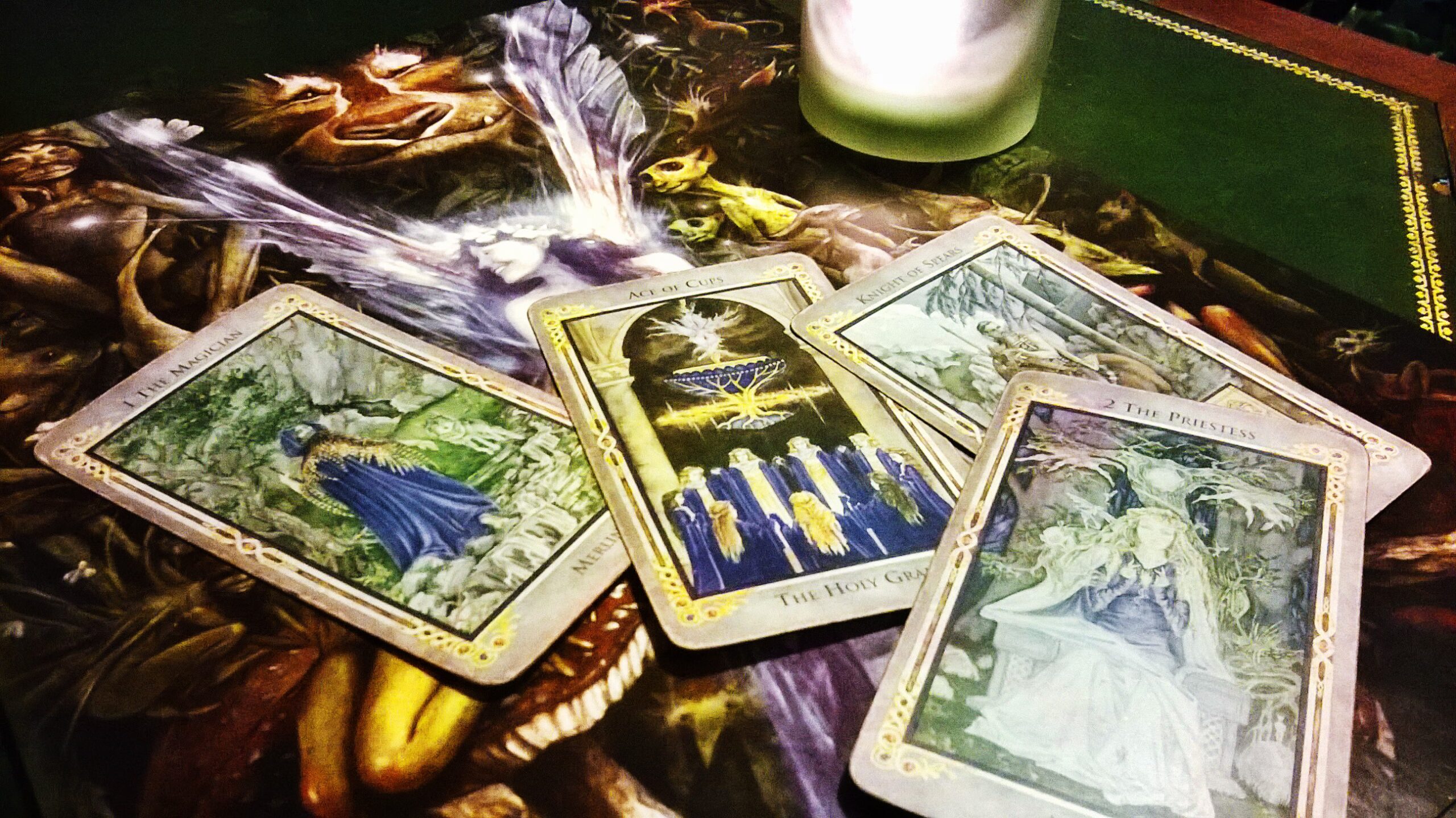
Psychic.Cards · Reflection with perspective
Tarot cannot identify a destined partner, reveal someone’s appearance or prove a past-life bond. The “soulmate” idea can still be a meaningful way to describe deep connection—if it does not replace consent, compatibility and evidence.
Explore the kind of partnership you want to welcome
Use positions for what I value, what I can offer and what helps me recognize mutuality. These questions give the reading substance beyond identifying a destined person or waiting for a promised arrival.
If the Two of Cups appears, describe the everyday exchange that would feel reciprocal. If the Nine of Pentacles appears, consider the independence you want to retain within a partnership. Let the reading honor both closeness and your own life. A hopeful spiritual idea can inspire participation without deciding another person’s feelings or future for them.
Use the spread to learn about yourself
Ask questions you can act on rather than requesting hidden facts about another person.
- What do I value? Name the qualities that matter in a healthy relationship.
- What pattern should I notice? Consider a habit you want to repeat or change.
- What boundary matters? Identify one limit that protects dignity and safety.
- What needs discussion? Choose a topic such as money, exclusivity, family or time.
- What evidence should I watch? Focus on consistent behavior, not promises.
- What can I offer? Consider the care and accountability you can bring.
- What is my next step? Choose a small action within your control.
What the cards cannot tell you
A card cannot determine a person’s eye color, astrological sign, secret feelings or spiritual “purpose.” It cannot establish that pain is necessary because someone is your soulmate.
Check the real relationship
- Is interest mutual and freely expressed?
- Can both people say no without punishment?
- Do words and actions match over time?
- Are conflict and repair handled respectfully?
Tarot can organize reflection. It should not encourage chasing, surveillance or staying in an unsafe relationship because a bond is described as destined.
Read for your participation, not their secrets
Keep all seven positions focused on your choices. Replace “What are they hiding?” with “What have we not discussed?” and “Will they come back?” with “What boundary helps me move forward?”. A useful spread can end with no contact, a pause or a direct conversation, depending on the real situation.
The notion of multiple soulmates and soul groups brings a new dimension to the traditional idea of a singular soulmate. This could reflect the complexity of human relationships and the various roles people play in our lives over time.
The concept of a soulmate as described in this article is quite intriguing. It leans heavily on metaphysical and spiritual beliefs which aren’t universally accepted. However, using Tarot as a tool for introspection and personal growth could have its merits.
The soulmate spread seems like a structured way to reflect on one’s personal relationships. While I’m skeptical about the accuracy of such practices, it could be a useful method for some people to better understand their feelings and experiences.
The idea of Tarot cards revealing insights about a soulmate is interesting. It appears to serve as a means for self-discovery rather than providing any tangible evidence of a predestined connection. The psychological aspect might be where its true value lies.
Using a Tarot spread to explore one’s soulmate conceptually aligns with broader themes in spiritual and metaphysical practices. While the empirical validity is debatable, the process might offer a unique framework for exploring personal narratives and relationship dynamics.